
Alloy Wheel Welding &
Crack Repairs
in Exeter
Cracked alloy wheels are dangerous — but replacement is not always necessary. Our TIG welding repairs restore structural integrity, saving you hundreds compared to new wheels.
Specialist alloy welding with full structural assessment. If it is not safe to repair, we tell you straight.
What Is Alloy Wheel Welding?
Alloy wheel welding is a specialist repair process used to fix cracks in aluminium alloy wheels. Using TIG (Tungsten Inert Gas) welding, we fuse the cracked sections back together with matching aluminium filler rod, restoring the structural integrity of the wheel.
Cracks in alloy wheels are caused by severe impacts — potholes, speed bumps taken too fast, or hitting debris. They can also develop from metal fatigue on older wheels that have been subjected to years of stress. A crack allows air to escape from the tyre and, if left unrepaired, can propagate across the wheel and lead to catastrophic failure.
Not every crack is repairable. The location, length, and direction of the crack all determine whether welding is a safe and viable option. Cracks on the rim lip and barrel are generally repairable. Cracks through the spoke face or hub area are higher risk and may not be suitable for welding. We assess every crack individually before recommending a course of action.
At South West Alloys, we combine welding with cosmetic finishing so the repair is invisible. After welding, the affected area is ground smooth, filled if necessary, and refinished to match the rest of the wheel. The result is a structurally sound wheel that looks as good as new.
Crack Identification & Repair
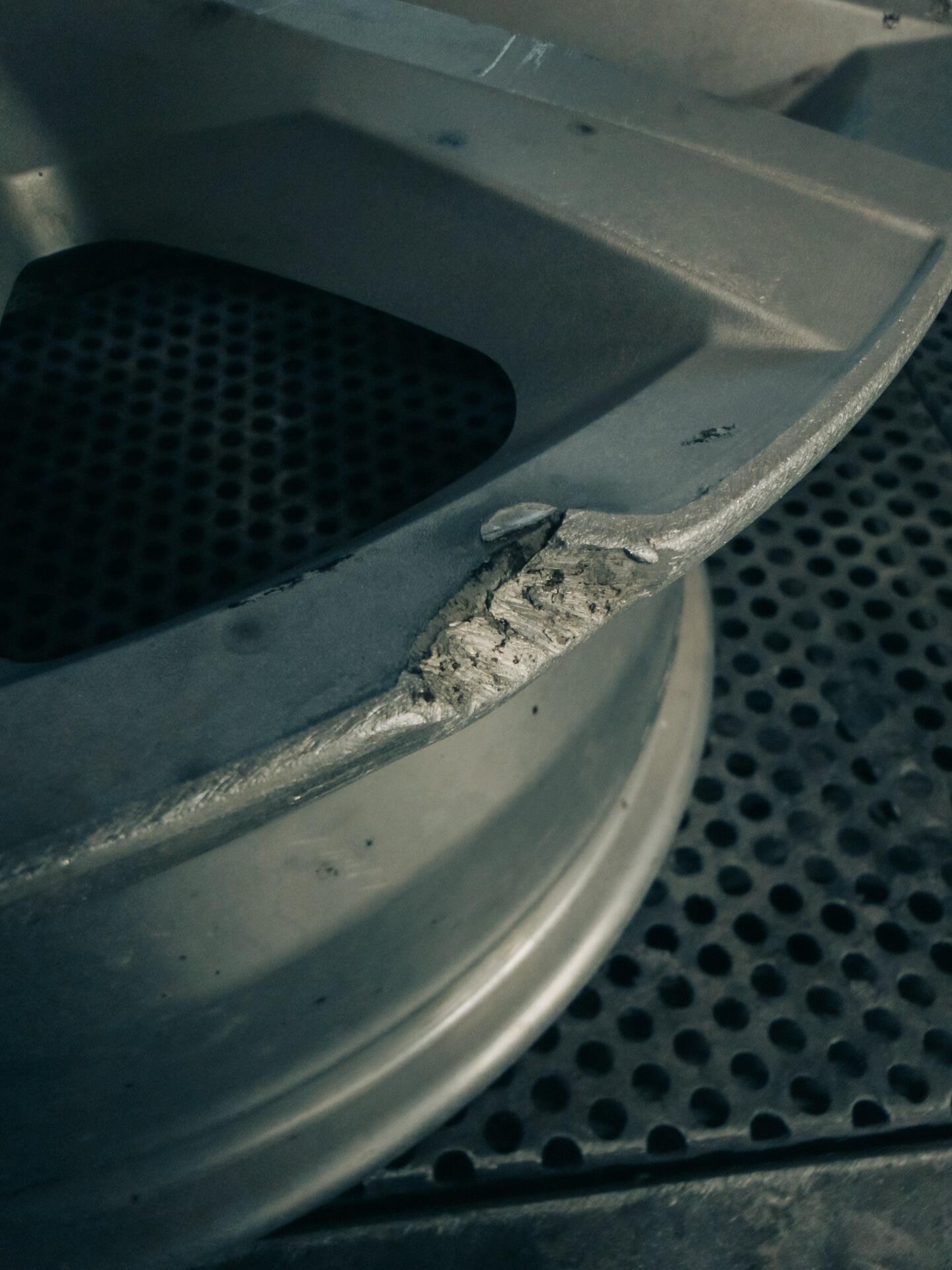
This wheel had a hairline crack on the inner barrel causing a persistent slow puncture. Our dye penetrant testing identified the crack, and TIG welding restored full structural integrity. After grinding and refinishing, the repair is completely invisible.
Why Ignoring a Cracked Wheel Is Dangerous
A cracked alloy wheel is a structural failure — not a cosmetic issue. The crack allows air to escape from the tyre, often presenting as a slow puncture that keeps returning despite repeated tyre replacements or re-seating attempts. This alone makes the vehicle unsafe.
More critically, cracks propagate under load. Every pothole, bump, and braking event applies stress to the wheel. A small crack grows larger with each cycle of use. What starts as a hairline fracture on the inner rim can spread across the barrel and eventually cause the wheel to split apart — potentially at speed.
Many drivers do not realise their wheel is cracked. Cracks on the inner barrel or behind spokes are invisible without removing the tyre. If you are experiencing persistent slow punctures or unusual vibrations that tyre balancing cannot fix, a crack may be the underlying cause.
The cost of ignoring a crack extends beyond the wheel itself. A sudden blowout caused by wheel failure can damage the wheel arch, bodywork, suspension, and brake components — turning a £100 weld into a £3,000+ repair bill. Early assessment and repair eliminates this risk entirely.
Our Welding & Repair Process
Crack Identification
The tyre is removed and the wheel is thoroughly inspected. We identify crack location, length, and direction. Dye penetrant testing is used for hairline cracks.
Weldability Assessment
We determine whether the crack is in a safe, repairable location. Cracks in the rim, lip, or barrel are typically weldable. Hub and spoke cracks require individual assessment.
TIG Welding
The crack is prepped and welded using TIG equipment with aluminium alloy filler rod. The weld penetrates fully through the crack to ensure complete structural repair.
Grinding & Finishing
The weld bead is ground flush with the wheel surface. Any remaining surface irregularities are filled and shaped to match the original profile.
Cosmetic Refinish
The repaired area — or the full wheel — is refinished to match the original colour and finish. The repair becomes invisible once complete.
Pressure Testing
The repaired wheel is re-fitted with a tyre and pressure tested to confirm the weld holds under normal operating pressures.
Benefits of Alloy Wheel Welding
Restores Structural Safety
A properly executed TIG weld restores the wheel to safe operating condition, eliminating the crack and preventing propagation.
Saves Hundreds vs Replacement
A weld and refinish is typically 40–60% of the cost of a replacement OEM alloy wheel. On premium wheels, the saving is even greater.
Eliminates Persistent Slow Punctures
If your slow puncture is caused by a cracked rim rather than a tyre issue, welding fixes the root cause permanently.
Invisible Repair
Combined with cosmetic refinishing, the repair is undetectable. The wheel looks factory-fresh once complete.
Fast Turnaround
Most weld repairs are completed within 24–48 hours, including cosmetic finishing. Urgent cases can be prioritised.
Honest Assessment
If a crack is not safe to weld, we tell you. We never compromise safety for revenue. Your safety is the bottom line.
Welding Methods, Materials & Limitations
We use AC TIG (Alternating Current Tungsten Inert Gas) welding for all alloy wheel crack repairs. AC TIG is the industry-standard method for welding aluminium alloys because it provides excellent heat control, clean welds, and full penetration through the crack.
The filler rod used matches the aluminium alloy composition of the wheel — typically 4043 or 5356 grade aluminium filler. This ensures the weld has similar strength, ductility, and corrosion resistance to the parent metal. Using incorrect filler material is one of the most common mistakes made by inexperienced repairers.
Pre-weld preparation is critical. The crack area must be cleaned of all paint, lacquer, and oxidation. The crack is ground out to a V-profile to allow full weld penetration. Any contamination in the weld zone will cause porosity — air pockets that weaken the repair. Our preparation process eliminates this risk.
Location determines repairability. Rim lip cracks — caused by kerb impacts — are the most straightforward to weld and have the highest success rate. Barrel cracks from pothole damage are also generally repairable. Spoke cracks carry higher structural risk because spokes bear the vehicle's weight and braking forces. Hub cracks — near the bolt holes — are rarely recommended for welding due to the extreme stress concentrations in this area.
After welding, we recommend full cosmetic refurbishment of the affected wheel. This is not just for appearance — the new lacquer layer provides corrosion protection over the weld area, which would otherwise be exposed bare metal. We offer combined weld-and-refurbish pricing that saves money compared to separate bookings.
For wheels where welding is not safe, we will advise on replacement options. We can source matching OEM or aftermarket replacement wheels for most vehicles and refurbish them to match your remaining set.
Frequently Asked Questions
Related Services
Areas We Serve
Ready to Get Started?
Contact us today for a free, no-obligation estimate. Most jobs completed within 24–48 hours.
12+ years experience · Trade & public welcome · German products
We use essential cookies to run this site, and optional cookies for chat and analytics. Cookie policy